Decide whether cane tying is the real problem

Plant Tapener Tying Tool controls and screen

A tomato tying tool for canes is worth considering when you are fastening new tomato growth again and again, rather than tying one or two stems at the start of the season. If your plants are already climbing bamboo canes, strings, trellis or a simple frame, the job is not just support; it is making consistent loose loops as stems extend, lean, fruit or slide. In a small UK greenhouse or grow bag run, that can turn into a repeated spring and summer task where string, fabric strips and wire ties start to feel slow or untidy.

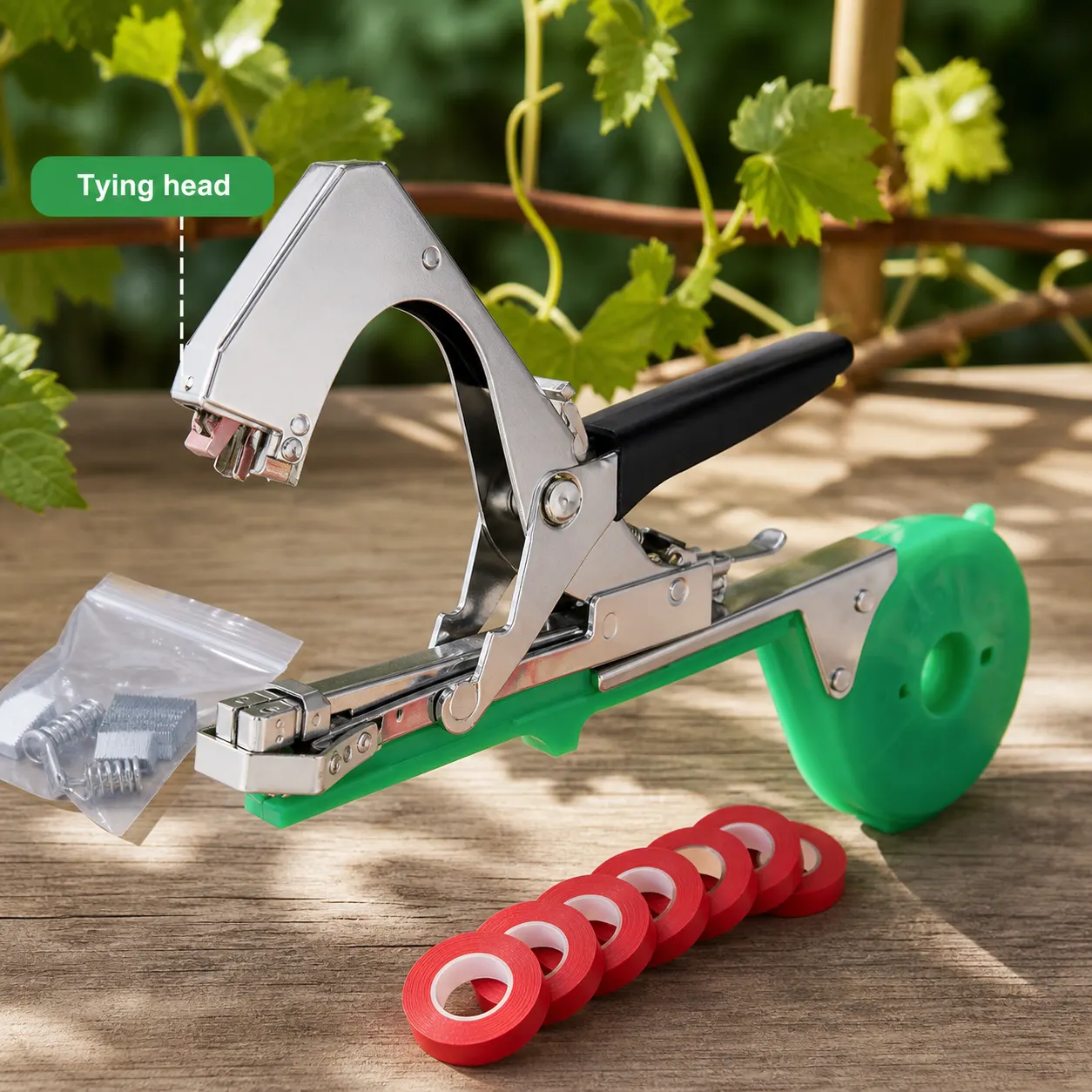
The useful first decision is simple: are you trying to replace the support, or the tie? A tool such as the Green T777 plant-tying tool set does not replace canes, strings or frames. It is a fastening method for attaching plant growth to those supports. That distinction matters for beginners because a drooping tomato plant may need better positioning, earlier tying-in or a sturdier cane before any tying tool helps. If your canes are unstable, leaning or too short for the plant, sort the support structure first.

Match the tool to a UK greenhouse or allotment setting

Picture a narrow greenhouse path in Bristol, Leeds or Glasgow with cordon tomatoes in grow bags on one side and cucumbers or climbing vegetables on the other. Space is tight, leaves brush your arm as you pass, and the practical goal is to keep stems upright, visible and easier to inspect. In that setting, a tapener-style tool can make sense because the action is repeated along the row: position the stem near the cane, make a loose fastening, move to the next plant, and come back as growth extends.

The same logic can apply on an allotment plot where tomatoes, young vines or mixed climbers are trained along canes, tutors, trellis wires or frames. Outdoor plants still need checking after wind, heavy growth or a change in fruit load, so the tie method should not be treated as a one-off fix. A tool can support a tidier workflow, but it does not remove the gardener’s judgement. You still need to leave room around soft stems, avoid forcing late growth into a harsh bend, and check fastenings as plants thicken.

Check the documented set before judging value

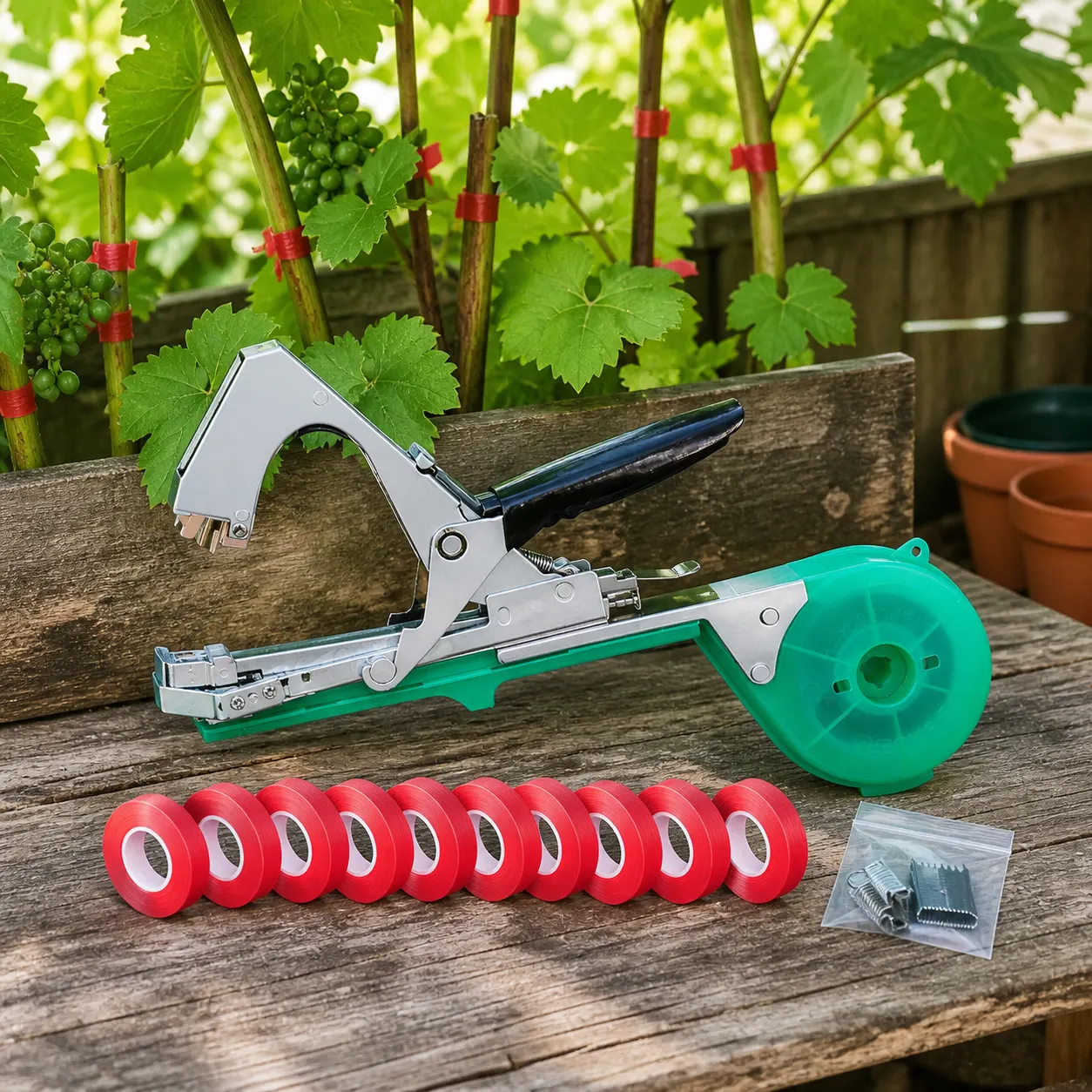
The documented product here is the Green T777 Plant Tying Tool Set with Tape and Staples. The selected configuration is the green set and is locked to one tool, ten rolls of tape and one box of staples. That matters because many buyers compare these products across listings where images, colours and kit contents can blur together. For this set, judge it as a complete starter bundle rather than a bare tool, because the tape and staples are part of the working method from the first tying session.

The listed use language covers tomato, grape, cucumber and vegetable tying. That is helpful for a grower who has more than one crop trained vertically, but it should not be stretched into claims that are not documented. The frozen facts do not state stem diameter limits, support thickness limits, tape dimensions, staple count, certification, lifespan or jam resistance. A careful buyer should therefore use the facts as a boundary: green T777 tool, ten rolls of tape, one box of staples, for plant tying tasks named around tomatoes, grapes, cucumbers and vegetables.

Use loose loops rather than tight restraint

The most important technique check is not brand-specific: plants need support, not clamping. When tying tomatoes to canes, the fastening should guide the stem and help keep it upright without squeezing soft growth. A tape loop that is too tight can become a problem as the stem thickens, especially during warm periods when plants put on growth quickly. This is why a tying tool still requires a human pace: align the stem gently, fasten where support is needed, then leave enough room for movement and growth.

For a greenhouse bench or narrow path, it can help to work from the lower established growth upwards, checking old ties as you add new ones. If an older fastening looks tight, untidy or badly placed, address that rather than simply adding another tie above it. Tomatoes grown on canes often need repeated attention because the plant keeps extending and fruit can change the balance of the stem. The tool is only one part of the method; the better habit is regular, calm tying-in before stems flop, twist or become difficult to reposition.

Compare tapener tying with string, soft ties and improvised strips

String, soft plant ties and fabric strips can all work, especially for a few plants. Their advantage is familiarity: most gardeners already know how to loop and knot them, and they do not require staples. For a small kitchen garden with two tomato plants by the back door, a dedicated tying tool may be unnecessary. The objection is reasonable. If you only tie occasionally, and you are happy with the look and feel of your current method, the simplest answer may be to keep using it carefully.

A tapener-style tool becomes more interesting when the number of fastening points rises. A row of cordon tomatoes, cucumbers on strings, vegetables on trellis and young vines can turn tying into a regular workload. The Green T777 set is documented as including the tool plus consumables, so it suits a buyer who does not want the first session blocked by missing tape or staples. It is not the same purchase as twine-only products, pruning shears, grafting tools or cable ties; it is a plant tying machine workflow based on tape and staples.

Avoid mismatches before you buy

Do not buy this kind of tool expecting it to prune, train the plant automatically, strengthen a weak cane or solve poor spacing in a greenhouse. It fastens growth to supports; it does not decide where the support should be, how many stems to keep, or whether a plant has outgrown its frame. It may also be overkill for a balcony grower with only a couple of plants, especially if they enjoy slow hand tying and want minimal consumable use.

You should also be cautious if you need verified details that are not present in the documented facts. There is no stated replacement tape specification in the input, no staple dimensions, no durability testing, no professional-grade claim and no confirmed compatibility with thicker support structures. If those details are central to your decision, treat them as questions to resolve before purchase rather than assumptions. A tidy product page should show the exact green set, the tape path, the staple area and the fastening loop clearly enough for you to understand what you are buying.

Work through this cane-tying checklist

Before choosing a tomato tying tool for canes, stand in the place where you will use it and count the real tying points. Check how many tomato stems need fastening now, how many will need attention as they grow, and whether cucumbers, grapes or other vegetables share the same support routine. Check the support surface too: ordinary canes, strings, trellis and frames are the named setting in the buyer problem, but the documented product facts do not give maximum support thickness, so do not assume every frame or post will suit the tool.

Then check the set itself against the task: one green T777 tool, ten rolls of tape and one box of staples. Check setup confidence: you will need to load tape and staples, so clear visual guidance on the product page is useful. Check content: the set includes consumables to begin tying, but future replacement matching is still something to identify. Check plant aftercare: plan to revisit loops through the season, especially where stems thicken or fruit changes the weight. Finally, check the environment: a cramped greenhouse rewards a tidy one-handed workflow more than a garden with only occasional tying.

Take a grounded next step for the season

If your tomatoes are already on canes and the repetitive tying is the nuisance, compare the Green T777 set against your actual plant count rather than against an idealised commercial setup. The public facts support a straightforward expectation: a green plant tying tool supplied with ten rolls of tape and one box of staples, described for tomato, grape, cucumber and vegetable tying use. That is enough to judge whether it fits a seasonal greenhouse or allotment tying job, but not enough to make claims about speed, lifespan or heavy professional use.

For a buyer who is ready to proceed, the listed commerce details are also practical: the price shown in the frozen input is £27.57, VAT is included, and the policy states Free UK Delivery, with processing of 1-3 business days and delivery 2-4 business days after dispatch. The return window is listed as 30 days. Use those details alongside the product checks, not instead of them. The sensible next move is to confirm the exact green set contents, look for clear loading and loop images, and decide whether your cane-tying workload is large enough to make the tool earn its place on the greenhouse bench.