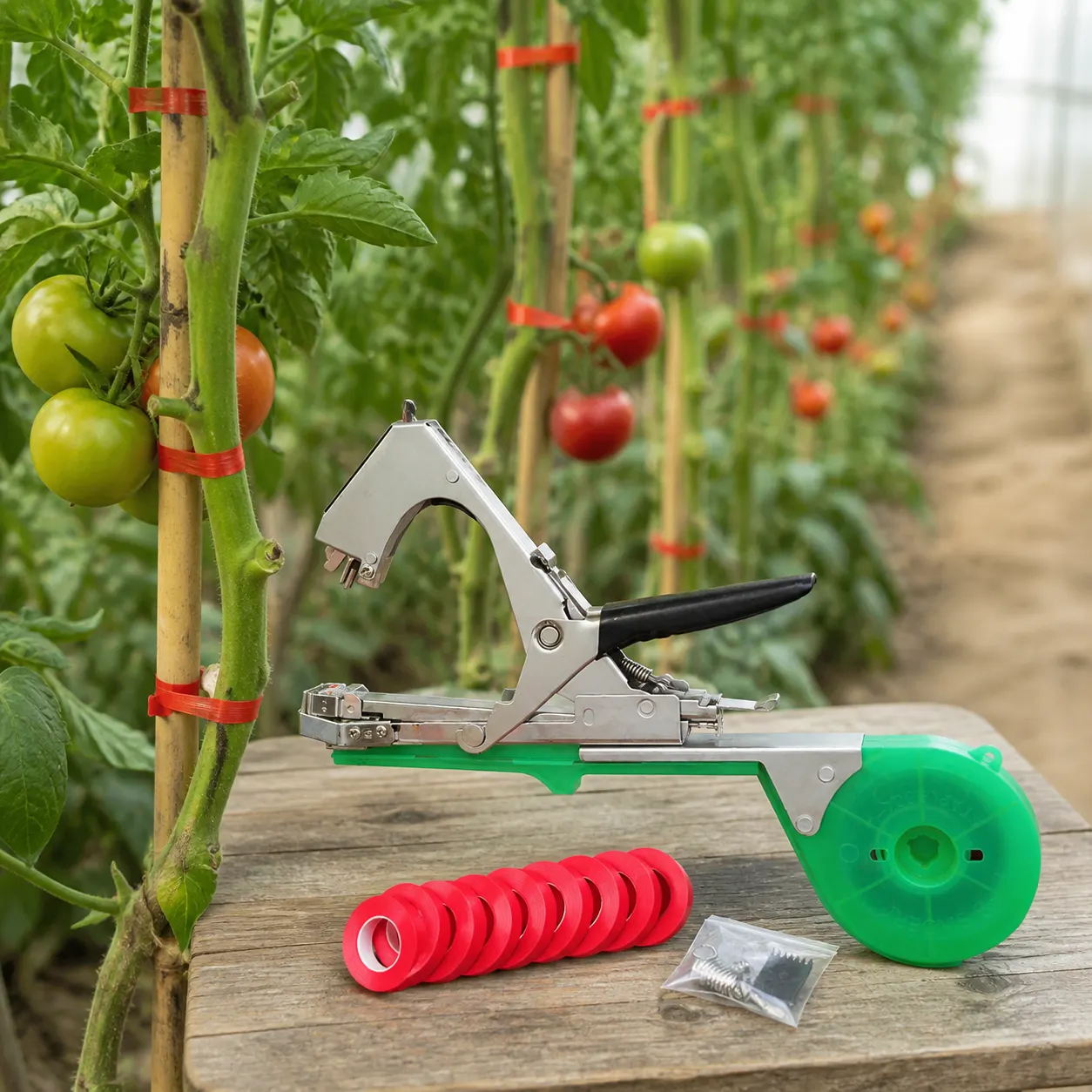
Short answer: A plant tying tool for tomatoes is worth considering when repeated fastening to canes, string or a greenhouse support is taking time by hand. The Green T777 set listed by Planttying contains one tool, ten rolls of tape and one box of staples, and the product title includes tomato tying use. That confirms the kit category, not a guaranteed crop benefit. Manufacturer does not specify tape or staple dimensions, replacement fit, service life or plant results. Start with the tomato support method, then confirm the tool and consumables match it.
Start with the tomato support
Tomatoes may be grown against canes, strings or a greenhouse support, and the practical tying job changes with each arrangement. The T777 title describes tomato, grape, cucumber and vegetable tying use, which makes the product relevant to a general tying comparison. It does not identify a specific cane diameter, string gauge, plant variety or greenhouse layout.
RHS tomato guidance can help define the growing context, but it is not evidence that this tool changes plant performance. Use the support to carry the plant and use the tie only to guide it. If the plant or support is moving, solve that underlying issue rather than tightening the fastening.
| Tomato support | Buyer check | Unknown from the product page |
|---|---|---|
| Single cane | Access around the cane and stem | Cane diameter compatibility |
| String-trained plant | Whether the tape route suits the string | String size and replacement details |
| Greenhouse frame | Working room and tie inspection | Universal frame or crop compatibility |
Confirm what arrives in the box
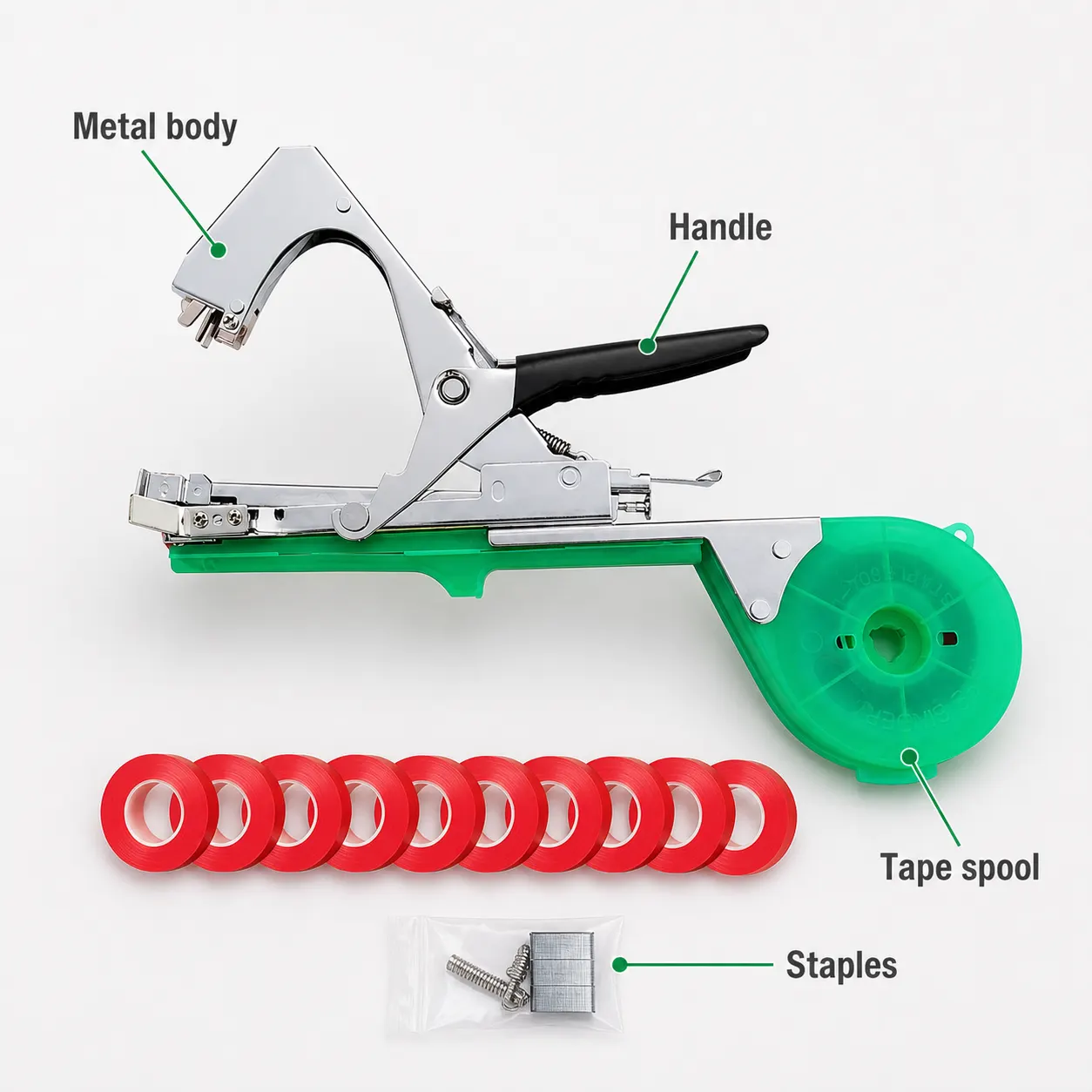
The selected configuration is a Green T777 plant tying tool set with tape and staples. The page states one tool, ten rolls of tape and one box of staples. Those facts help a buyer compare an initial kit, but they do not establish the number of ties, consumable dimensions, staple material or availability of replacements.
If your tomato routine depends on a whole-season supply, calculate from your own spacing and inspect the package before planting work begins. Manufacturer does not specify how long the rolls last or whether a different tape or staple pack will fit the tool.
Tie in a controlled sequence
A controlled sequence keeps the tool subordinate to the plant. Test the feed and staple action on spare material, then make a tie where the stem needs guiding. Revisit the tie as growth continues. The product page does not support any claim that a faster tying process improves tomato yield or disease resistance.
- Map the support and decide where a tie is genuinely needed.
- Check the tape and staple path on spare material before touching a plant.
- Place the tie with enough room for the stem and without trapping leaves or growing points.
- Inspect the fastening during growth and adjust or remove it if it becomes tight.
Limits before ordering
Manufacturer does not specify tape width, tape length, staple size, replacement compatibility, tool weight, service life or a tomato-specific performance claim. If you need a recognised consumable standard or a documented fit with an existing tapener, ask for that evidence instead of assuming the T777 is interchangeable.
The listed price is £27.57 with VAT included, alongside Free UK Delivery and 30-day returns. Those terms may make the set convenient as a first purchase, but the central decision remains practical: can the documented tool and supplied consumables fit your tomato support and inspection routine?
Related guides and product details
Choose the T777 for a documented first tying kit only when its support route and consumables fit your tomato routine; do not buy it for an unproven crop claim. Read Tomato Tying Tool for Canes: What to Check for related guidance. Read Garden Tape Tying Tool for Cucumbers for related guidance. Review the documented specification on the Green T777 Plant Tying Tool Set with Tape and Staples product page before ordering.
Sources and safety context
- Supports the T777 product identity, contents and listed tomato use. Current Planttying plant tapener tying tool product page.
- Supports the tomato growing and support context without attributing crop results to the T777. RHS: Growing tomatoes.