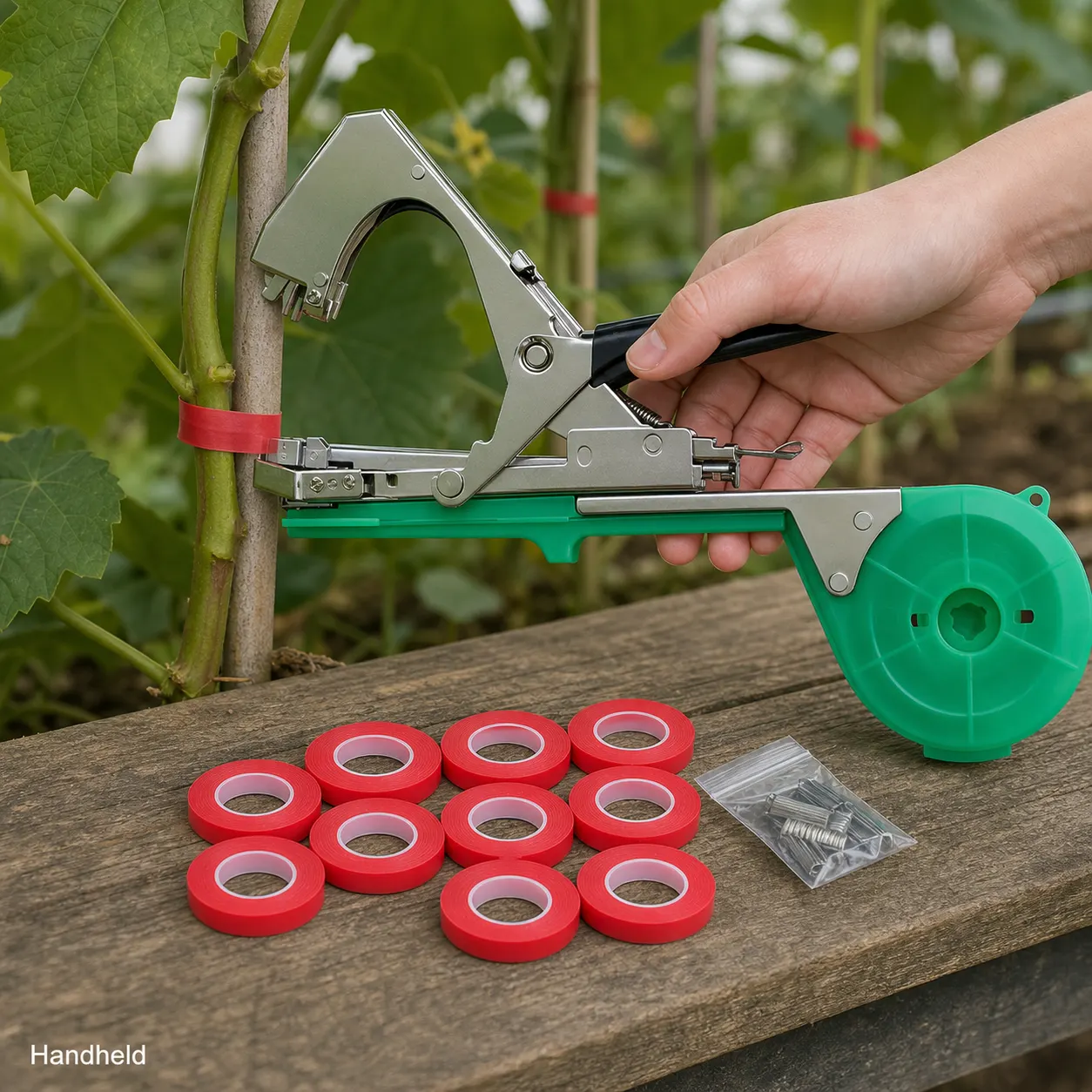
Short answer: A garden tape tying tool can make repeated fastening around cucumber supports more organised, but it does not decide how a plant should be trained or guarantee growth results. The listed Green T777 set includes one tool, ten rolls of tape and one box of staples, and its title describes cucumber, tomato, grape and vegetable tying use. Manufacturer does not specify tape dimensions, staple dimensions, replacement compatibility, service life or any plant-growth effect. Compare the tool with your greenhouse or allotment support system, then check the tape and staple path before buying.
Match the tool to cucumber support
Cucumbers may be trained against a greenhouse frame, trellis, string or another support chosen for the growing space. The T777 product title describes cucumber tying use, so it can be considered where repeated fastening is the practical job. The listing does not specify a particular greenhouse system, stem thickness or support diameter.
Treat the tool as a way to apply a tie, not as proof that every stem should be tied tightly. Leave the plant room to move and grow, keep the support doing the structural work and inspect the tie as the plant develops. The product page does not claim improved yield, faster growth or reduced disease.
| Growing setup | What to check | What the listing does not prove |
|---|---|---|
| Greenhouse trellis | Tape path and access around the frame | Universal frame compatibility |
| String or cane support | Whether the tie can hold the stem without constriction | Plant-growth or yield improvement |
| Allotment support | Whether spare tape and staples are available later | Replacement consumable compatibility |
Use the set contents literally
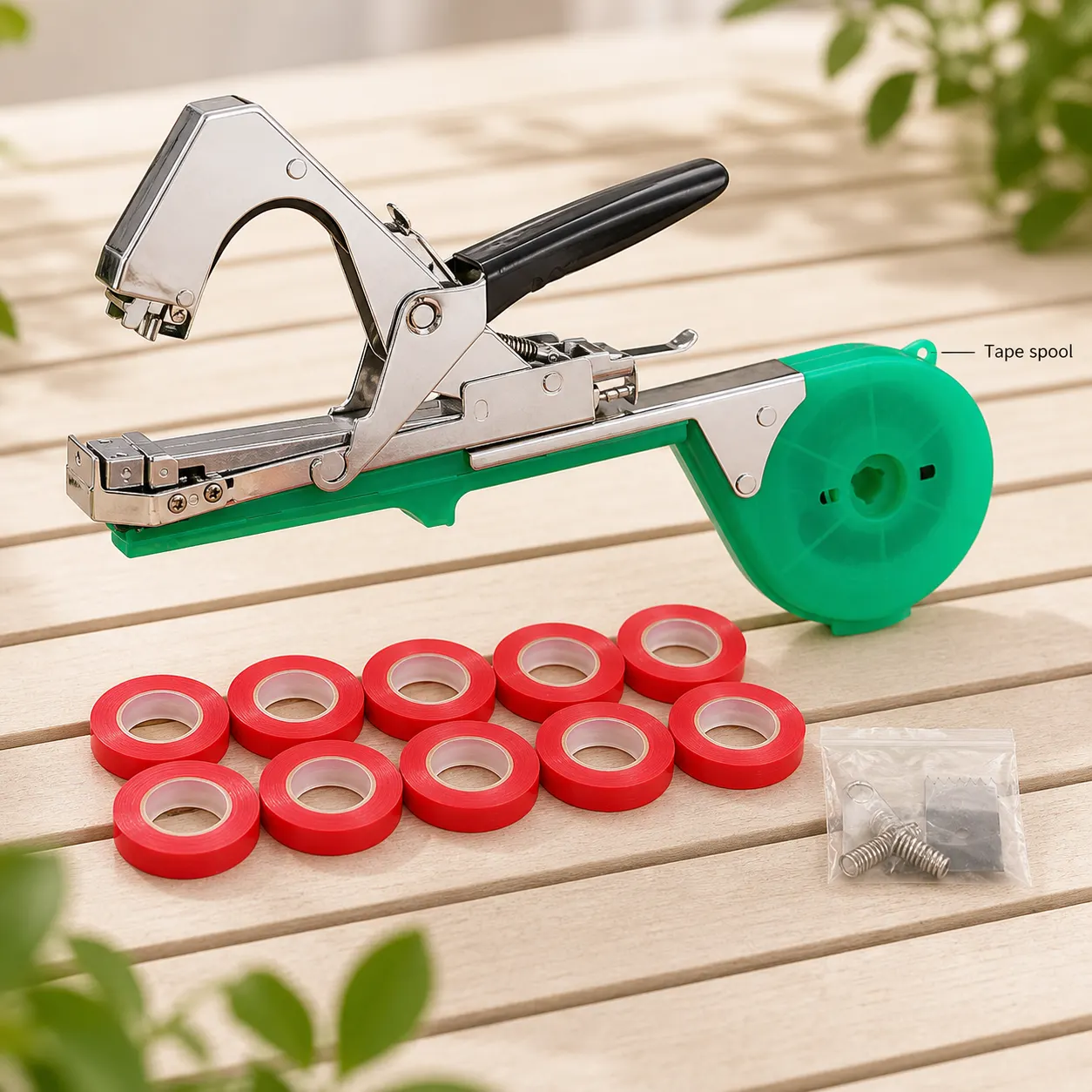
The current page identifies one Green T777 tool, ten rolls of tape and one box of staples. That is the useful package fact for a first comparison. It does not tell you how many ties the consumables produce, what width or thickness they have, whether the rolls fit other tapener tools or whether replacement rolls and staples are stocked.
Before a busy greenhouse session, open the kit and identify how tape feeds, where the staple is placed and what part touches the plant. If the exact manual or dimensions are needed for your support system, manufacturer does not specify them on the written product page and they should be confirmed before ordering.
Plan a gentle tying routine
RHS growing guidance is useful for the plant-training context, but it does not turn this particular T777 into a horticultural treatment. Use the plant's support plan first, then make only the ties needed to guide the stem. Check older ties as the plant grows and remove or adjust any tie that begins to mark the stem.
- Choose the support route and identify where the stem needs guidance.
- Test the tool on spare support material before using it on a live plant.
- Apply a loose, purposeful tie and keep the stem, leaves and growing point clear.
- Recheck ties during growth and replace or release any fastening that becomes restrictive.
Consumables and buying limits
Manufacturer does not specify tape width, tape length, staple size, replacement compatibility, corrosion resistance, tool weight, service life or a plant-specific safety claim. Do not infer that the ten rolls will cover a whole season or that generic replacement tape will fit. Ask for the exact consumable specification if continuity matters.
At £27.57 with VAT included, the set may suit a grower who wants a complete first kit for repeated tying. It is a weaker match if you already use a named tapener system, need a documented staple size or want evidence of a crop outcome. The product page lists Free UK Delivery and 30-day returns, but those terms do not fill the missing technical fields.
Related guides and product details
Consider the T777 for repeated cucumber tying only after the support route and consumable fit are clear; it is not evidence of a guaranteed plant result. Read Plant Tying Tool for Tomatoes: UK Buyer Checks for related guidance. Read Tomato Tying Tool for Canes: What to Check for related guidance. Review the documented specification on the Green T777 Plant Tying Tool Set with Tape and Staples product page before ordering.
Sources and safety context
- Supports the Green T777 identity, set contents, listed crop wording and commercial details. Current Planttying plant tapener tying tool product page.
- Supports the greenhouse and support-system context for cucumber growing without claiming a product-specific result. RHS: Growing cucumbers.